 how-to
How to Get Emergency Roadside Help From a Mobile Mechanic?
Quick Summary
Roadside assistance from a mobile mechanic means a technician comes to wherever your vehicle is, such as a driveway, workplace, or roadside, and handles jobs like jump-starts, flat tires, brake service and diagnostics on site. First, get the car out of the live lane if it will move, turn on hazards, and call with your exact location and symptoms.
- Mobile mechanics commonly handle battery jump-starts, flat tires, brake service, no-start diagnosis, and warning-light diagnostics on site.
- If the engine and steering feel normal, drive slowly to the right shoulder, a parking lot, or the next exit.
- Turn on hazard lights right away, and add parking lights or headlights at dusk, dawn, or in rain.
- Give the dispatcher your exact location, whether you're in a live lane, and any injuries before describing the problem.
- Ask for the call-out fee, diagnostic charge, and repair estimate as separate line items before work begins.
Table of Contents
- What Roadside Assistance From a Mobile Mechanic Covers
- Emergency Roadside Assistance Near Me: Steps to Take First
- What Information to Give When You Request Help
- When a Mobile Repair Makes Sense Versus a Tow
- How to Choose a Mobile Mechanic You Can Trust
- Mobile Car Diagnostic Services for Hard-to-Find Problems
- Booking Your Roadside Call With Chops Mobile Mechanic
- Frequently Asked Questions
What Roadside Assistance From a Mobile Mechanic Covers
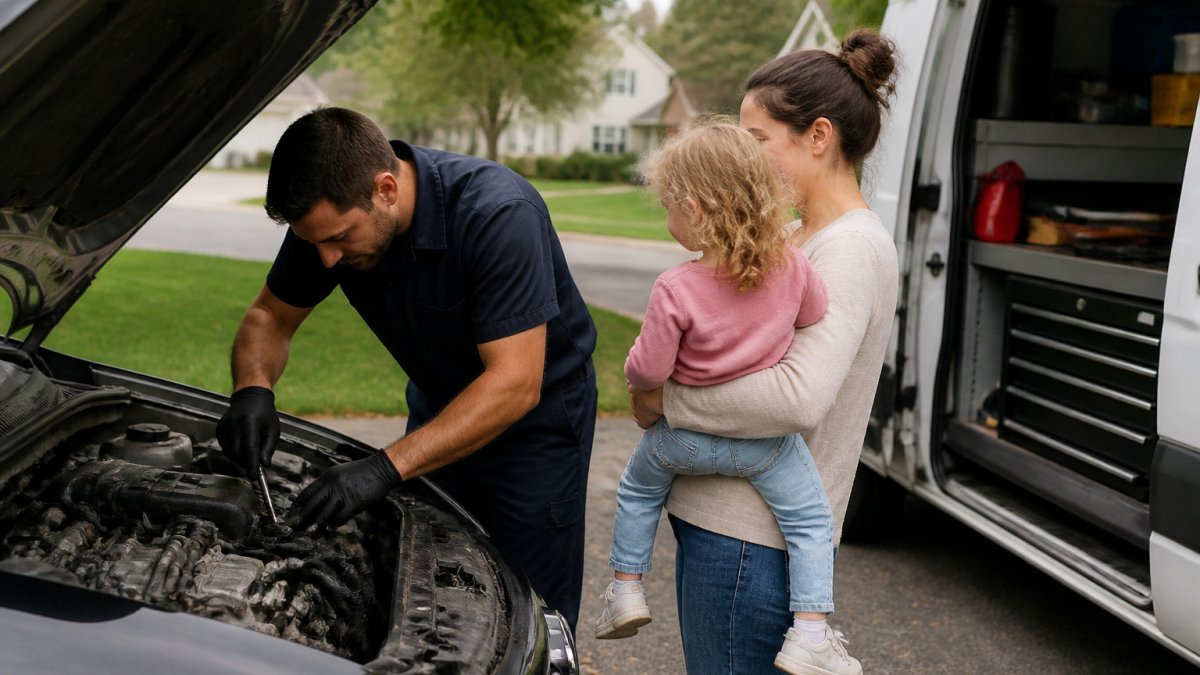
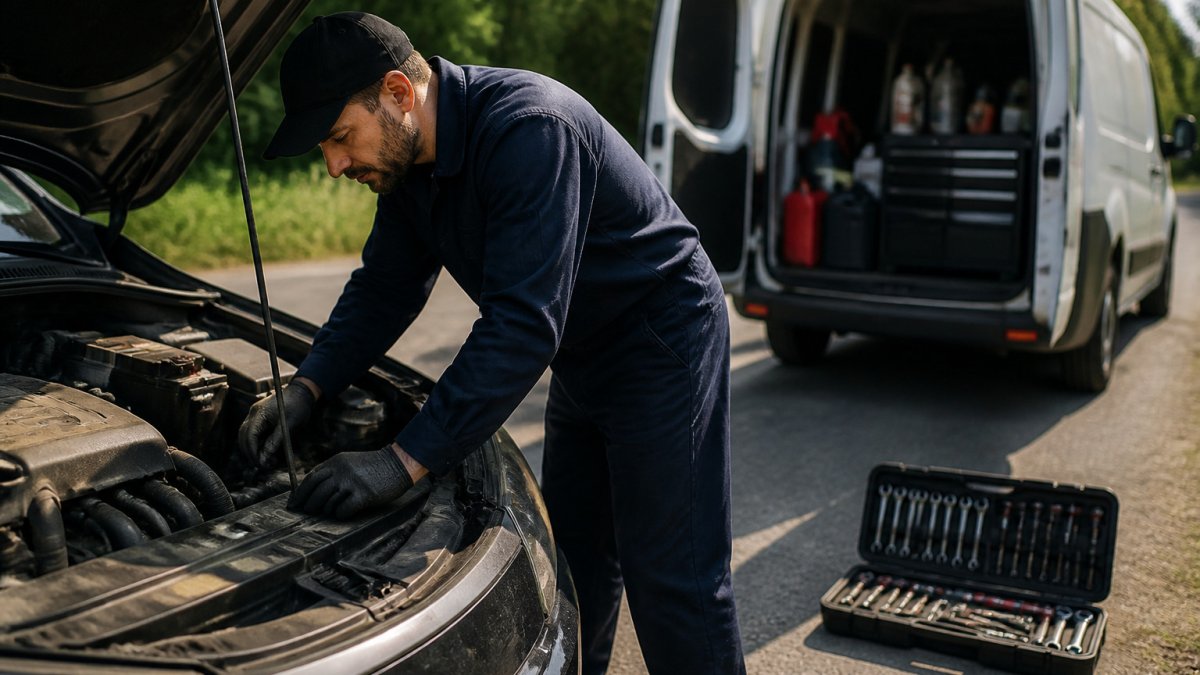
Roadside assistance from a mobile mechanic means a technician comes to where your vehicle is, whether that's your driveway, your workplace, or the shoulder of a road.
Chops Mobile Mechanic provides on-site service in the Hagerstown and Frederick areas, including diagnostics, brake repairs, oil changes, and emergency roadside and lockout assistance.
The main services usually include:
- Battery testing, replacement, and jump-starts for no-start situations
- Flat-tire repair, tire swaps, and installation on the roadside or at home
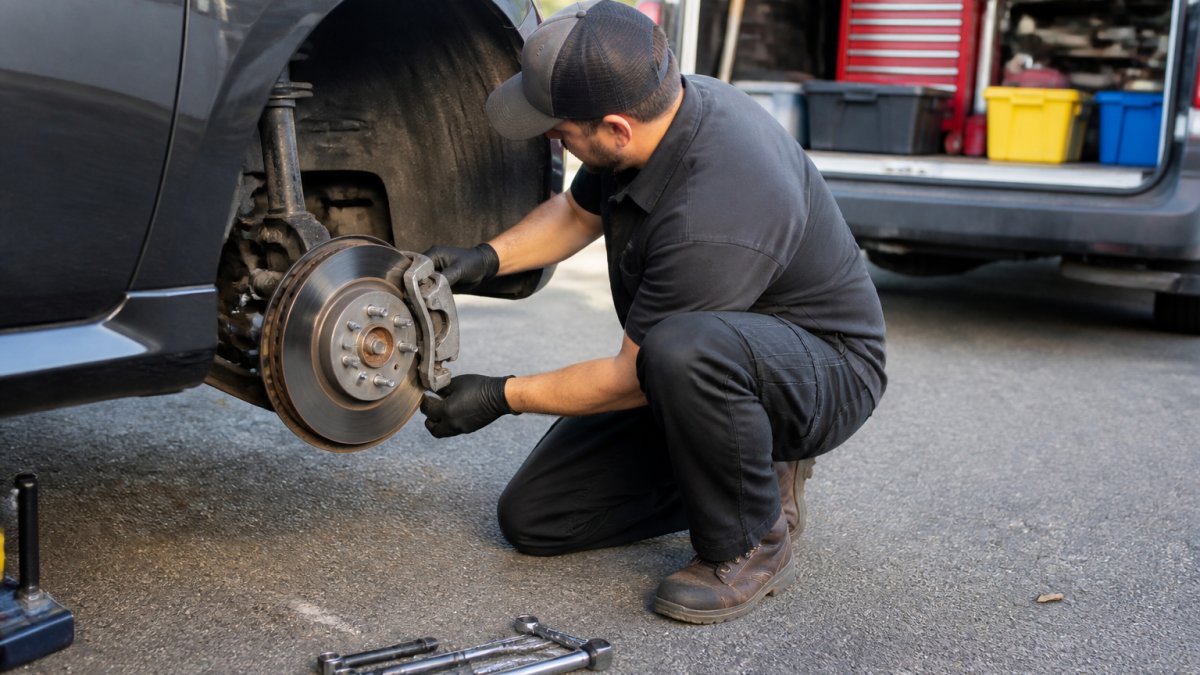
- Brake service for worn pads or a car that pulls or feels unsafe
Not every problem can be fixed on the roadside.
Emergency Roadside Assistance Near Me: Steps to Take First
When your car breaks down, the first few minutes matter more than the repair itself. Most roadside injuries happen because a driver stays in a live lane, walks along the traffic side of the vehicle, or stands behind the car where approaching drivers cannot see them. Treat safety as a sequence, not a single step.
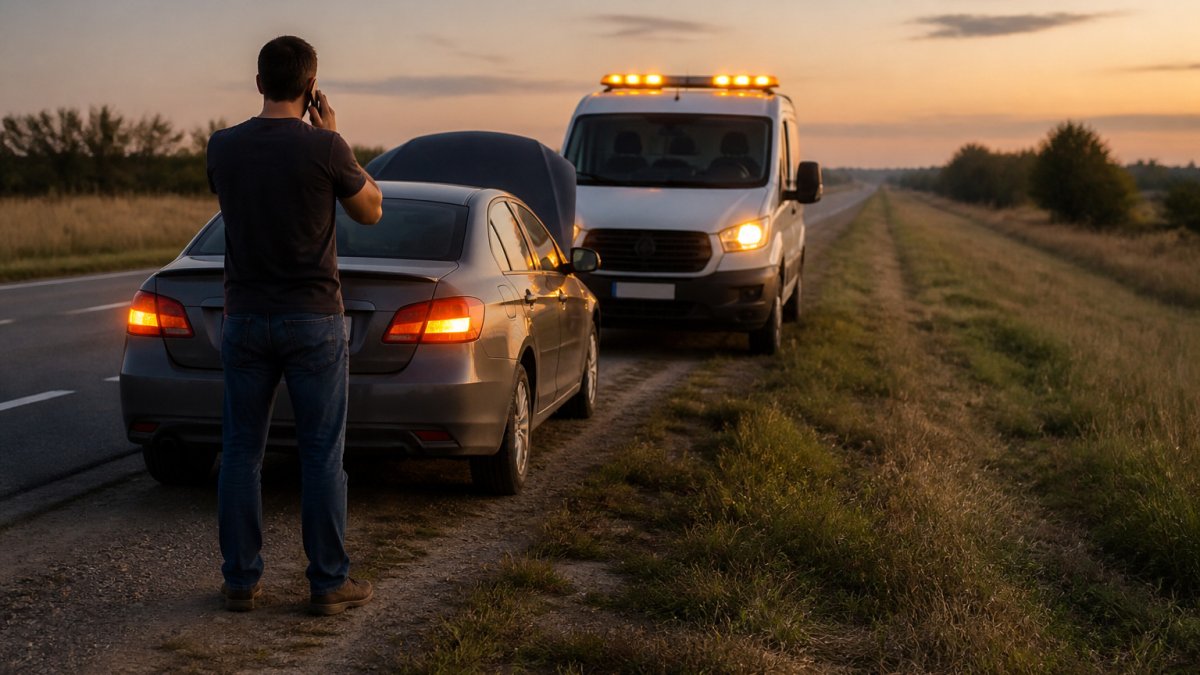
Step 1: Get out of the travel lane if the car will move
If the engine still runs and steering and brakes feel normal, coast or drive slowly to the right shoulder, a parking lot, a driveway, or the next exit. Do not stop in a travel lane to inspect the problem. If the car will not move, leave it where it is, turn the wheels away from traffic if you can, and focus on visibility.
Step 2: Make the vehicle visible
Turn on your hazard lights immediately. At dusk, dawn, or in rain, turn on the parking lights or headlights as well. If you carry a reflective triangle or road flares, place them behind the vehicle on the traffic side only when it is safe to do so, never walk into a live lane to set them out. On a limited-access highway such as I-70 or US-340, the safest choice is usually to stay buckled inside with hazards on and call for help rather than set out warning devices.
Step 3: Decide whether to stay inside or exit
- Stay inside, seatbelt on, hazards flashing when you are on a high-speed road, in a tunnel, on a bridge, or in heavy traffic and the car is in a reasonably visible spot.
- Exit and move to safety when the car is in a live lane, on a blind curve, or at risk of being hit, and you can reach a guardrail, shoulder, or business parking lot away from traffic. Exit on the passenger side when possible and keep everyone, including pets, together and away from the roadway.
Step 4: Pin your location precisely
Open your phone's map app and drop a pin, or read off the nearest mile marker, exit number, cross street, or business address. On rural roads, note the last town you passed and the direction you were traveling. "I-70 eastbound near the Route 15 interchange" gets a technician to you faster than "I'm on the highway."
Step 5: Call for help and describe the situation
Search for emergency roadside assistance near me or contact Chops Mobile Mechanic directly through its website. Give the dispatcher three things first: your exact location, whether you are in a live lane or a safe shoulder, and whether anyone in the vehicle is injured or in danger. Then describe the symptom, won't start, flat tire, smoke, warning light, strange noise, and your vehicle's year, make, and model.
Step 6: Stay reachable and wait safely
Keep your phone on and answer unknown numbers; technicians often call from a dispatch line. Stay in or near the vehicle where you are visible, keep hazard lights on until help arrives, and do not accept a ride from an unsolicited passerby. If you feel unsafe at any point, call 911.
What not to do while you wait
- Do not open the hood on a hot engine or touch battery terminals.
- Do not crawl under the vehicle for any reason.
- Do not leave children or pets unattended in the car on a busy shoulder.
If you are on a highway and cannot reach a safe spot, stay buckled in, keep hazards on, and tell the dispatcher you are in a live lane so the call is prioritized.
What Information to Give When You Request Help
Clear details help the technician arrive prepared with the right tools. Before you call, have the following ready:
- Your exact location, including nearby cross streets or highway exits
- Vehicle year, make, model, and engine size if you know it
- A short description of the problem and when it started
If you are locked out, tell the dispatcher whether you have a spare key or know the vehicle's make and model. This helps the technician plan the lockout service.
Having these details ready before you call helps the technician arrive prepared.
| Detail | Why it helps | Example |
|---|---|---|
| Exact location | Lets the technician find you quickly | Nearby cross street or highway exit |
| Vehicle year, make, model | Lets the technician bring the right tools | Engine size if known |
| Problem description | Narrows the likely cause | When it started, symptoms seen |
| Warning lights | Points to specific faults | Lights shown on the dashboard |
| Recent work or jump-starts | Explains recent changes to the car | Repairs, rough terrain, water driving |
| Callback number | Lets the technician reach you | Best number during the service call |
When a Mobile Repair Makes Sense Versus a Tow
A tow is more practical when the vehicle is undrivable because of major engine or transmission damage, a serious collision, or a safety problem that requires a full shop lift.
Watch out: do not drive a car with a known brake or steering fault just to reach a shop. Ask the technician whether the vehicle is safe to move before you start the engine.
How to Choose a Mobile Mechanic You Can Trust
Choosing a mobile mechanic is mostly about verifying three things before the technician arrives: who is coming, what the call will cost, and what happens if the repair cannot be finished on site. Get those answers on the phone or in writing, and you avoid most surprises.
Verify qualifications and coverage
Ask whether the technician holds automotive certifications and whether the business carries liability insurance. Our page on how to verify mobile mechanic credentials shows you how to check ASE certification and insurance. A legitimate mobile business should be able to provide proof of insurance on request, and you should ask for a written invoice for every job.
Understand what the call will cost
Mobile service pricing usually has three parts, and a trustworthy provider will separate them:
- Service-call or dispatch fee, a flat charge to bring the truck to your location, often higher outside a core service area or after hours.
- Diagnostic charge, the time to identify the fault, which may be credited toward the repair if you approve the work.
- Repair labor and parts, quoted after diagnosis, based on the job and the parts needed.
Ask specifically about after-hours, weekend, and holiday rates, and whether the call-out fee is waived if the repair is completed. Get the estimate before work begins and confirm whether the diagnostic fee is separate from the repair quote.
Know the limitations before you book
Not every repair can be done at the roadside or in a driveway. Mobile mechanics typically cannot perform jobs that require a lift, an alignment rack, or a controlled shop environment, major engine or transmission teardown, frame or collision repair, and some suspension work fall into that category.
Ask what happens if the technician arrives and finds the job is beyond roadside scope. A good provider will explain your options, a temporary fix, a return appointment with the right part, or a tow, and will not charge for work that was not approved.
Confirm the warranty and payment terms
Ask what the workmanship warranty covers, how long it lasts, and what is excluded. Chops Mobile Mechanic offers a 12-month warranty on repairs, so ask what that covers and any conditions that apply. Also confirm accepted payment methods, cash, card, or mobile payment, and whether payment is due at the time of service.
Questions to ask before you hire anyone
- Are you ASE-certified and insured, and can you provide proof?
- What is the call-out fee, the diagnostic charge, and the after-hours rate?
- Will you credit the diagnostic fee toward the repair if I approve the work?
- What does your warranty cover, and what is excluded?
A provider who answers these questions clearly and puts the estimate in writing is usually the one worth calling back.
Mobile Car Diagnostic Services for Hard-to-Find Problems
Some car problems are hard to track down. An intermittent electrical fault, a warning light that comes and goes, or a no-start condition that happens only in certain conditions can take extra time to diagnose.
Chops Mobile Mechanic offers diagnostics on site. The technician can review warning lights and explain what they found and the next steps.
Diagnostics work best when you describe the symptoms in detail. Our guide on what to verify before hiring a diagnostic mobile mechanic explains the questions to ask.
Booking Your Roadside Call With Chops Mobile Mechanic
If you need roadside help in Frederick, Hagerstown, or nearby areas, Chops Mobile Mechanic can send a technician to your location. You can book a mobile mechanic visit directly from the site.
When you book, have your location, vehicle details, and a description of the problem ready. If you want faster future requests, you can create an account before you start.
Frequently Asked Questions
Who is the best mobile mechanic in Frederick, MD?
The best fit depends on what your vehicle needs. Look for a mechanic who lists the services they perform, shows an active service area that includes your location, states a clear warranty, and gives you an estimate before work starts. Chops Mobile Mechanic serves the Frederick and Hagerstown areas and backs its repairs with a 12-month warranty. Read recent customer reviews, ask whether the technician is ASE-certified, and request a written estimate so you can compare options on the same terms.
What should I have ready when calling for emergency roadside assistance?
Have your exact location, such as a highway mile marker, cross street, or nearby landmark. Note your vehicle's year, make, model, and color, and your license plate number. Describe the symptoms, including any warning lights, noises, smells, or whether the car will start. Keep your phone charged, and be ready to say whether you are safe and whether the vehicle is blocking traffic. This information lets the dispatcher send the right help quickly.
Is it cheaper to use a mobile mechanic than a traditional auto shop?
Mobile service can save time and a tow bill, since the work happens where the car is. Total cost depends on the repair, the parts involved, and the service call. Chops Mobile Mechanic does not publish a fixed price list here, so pricing depends on the job and your vehicle. Request a quote from Chops Mobile Mechanic directly and compare it with a shop estimate that includes towing, shop time, and any diagnostic fees.