 blog
5 Hidden Costs of Changing Oil at Home
Last Updated: October 25, 2026
Quick Summary
The oil change at home cost includes $27-$115 in recurring materials per change, plus $86-$268 in one-time tools for first-timers, plus 40-90 minutes of your time. Hidden costs like disposal fees, drain plug damage, and workspace cleanup can quickly erase savings compared to professional service.
- First-time DIY setup costs $86-$268 in tools like drain pans, wrenches, and jack stands.
- Recurring material costs per oil change run $27-$115, with most vehicles at $35-$60.
- DIY breaks even with shop service around the third or fourth change if you already own tools.
- Hidden costs include used oil disposal ($0-$10), drain plug damage ($100-$300), and filter wrench mistakes ($15-$30).
- Mobile mechanics charge $65-$125, similar to shops, but eliminate your time and workspace hassle.
Table of Contents
- What You Actually Pay for an Oil Change at Home
- DIY Oil Change Cost: Breaking Down Materials and Tools
- Oil Change Supplies You Need Before Your First Change
- How Long Does an Oil Change Take at Home
- Mobile Mechanic Oil Change Cost Versus DIY
- The Hidden Costs Nobody Talks About
- When Professional Service Makes Financial Sense
- Frequently Asked Questions
What You Actually Pay for an Oil Change at Home
The math on DIY oil changes looks simple at first. Shop prices run $35-$75 for conventional oil and $65-$125 for synthetic, according to CarMatcher's 2026 price guide. Do it yourself and you save money, right?
Not always. Understanding the true oil change at home cost means accounting for hidden expenses most people never factor in. Tools, disposal fees, your time, and mistakes add up fast. At Chops Mobile Mechanic, we help customers understand the true cost of vehicle maintenance, both DIY and professional.
This guide breaks down every expense involved in the oil change at home cost. You'll see exactly what you're paying for when you change oil at home. Then you can decide if the savings are worth it.
DIY Oil Change Cost: Breaking Down Materials and Tools
A typical DIY oil change requires oil, a filter, and basic tools. The materials themselves run $25-$50 for most vehicles. But that's only part of the story.
One-time tool costs (buy once, use for years):
- Oil drain pan (6-quart or larger): $10-$25
- Socket wrench set (including the correct drain-plug size): $20-$60
- Oil filter wrench: $8-$15
- Jack stands or ramps: $40-$150
- Funnel: $3-$8
- Safety gloves and eye protection: $5-$10
First-time setup total: roughly $86-$268, depending on what you already own.
Recurring per-change costs (every oil change):
- Motor oil: $16-$72 depending on type and capacity (see below)
- Oil filter: $8-$25
- Crush washer or drain-plug gasket: $1-$3
- Shop towels and gloves: $2-$5
- Used-oil disposal: $0-$10 (many auto parts stores accept it free; some recycling centers charge per gallon)
Recurring total: roughly $27-$115 per change, with most vehicles landing at $35-$60.
The break-even math over multiple oil changes. Suppose your first-time setup costs $120 and your recurring cost is $45 per change. Your first DIY oil change costs $165. A shop charges $35-$75 for conventional or $65-$125 for synthetic. If you compare against a $70 synthetic shop change, you break even somewhere around your third or fourth DIY change:
- Change 1: $120 setup + $45 = $165 (vs. $70 at a shop)
- Change 2: $45 (vs. $70)
- Change 3: $45 (vs. $70)
- Change 4: $45 (vs. $70)
Cumulative DIY cost after four changes: $300. Cumulative shop cost: $280. By change five, DIY pulls ahead, but only if you already own the tools or count the setup as a one-time expense you'll reuse for brakes, rotations, and other jobs.
If you already own the tools, the math flips immediately: every DIY change saves roughly $25-$80 versus a shop, depending on oil type.
AutoZone's DIY breakdown notes that materials alone cost $25-$50, but doesn't separate one-time tool investment from recurring costs. That distinction is what determines whether DIY actually saves you money.
Oil Change Supplies You Need Before Your First Change
You need specific items to do this job safely. Skipping any of them creates risk, both to you and your vehicle.
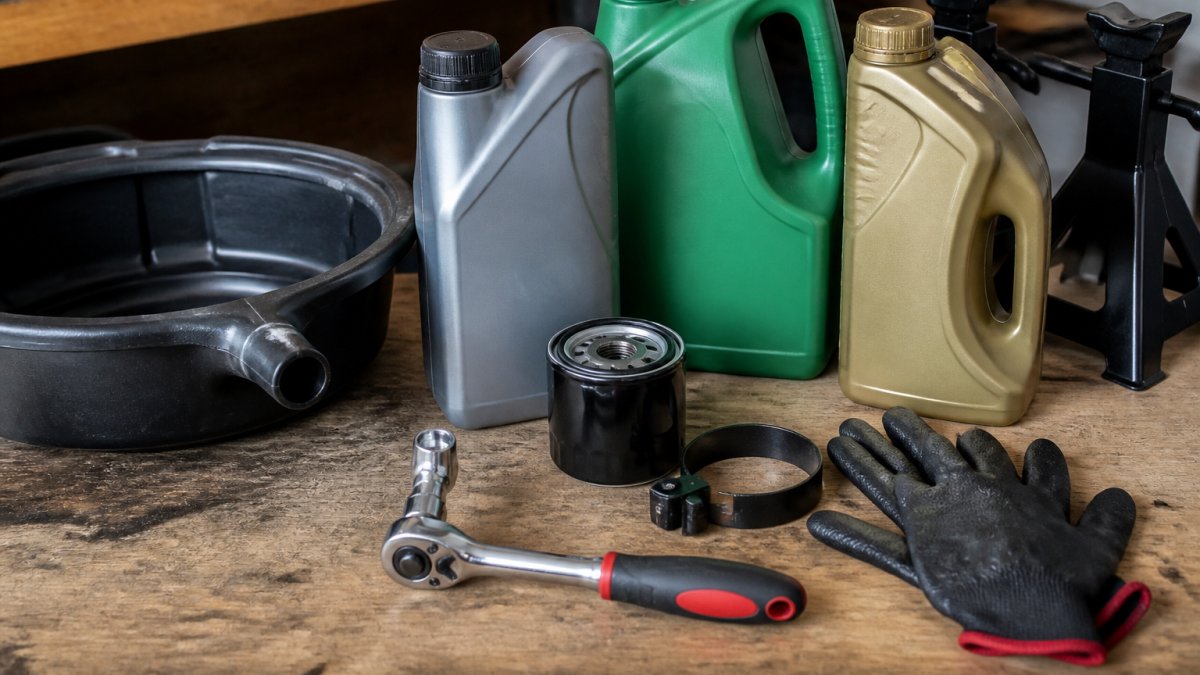
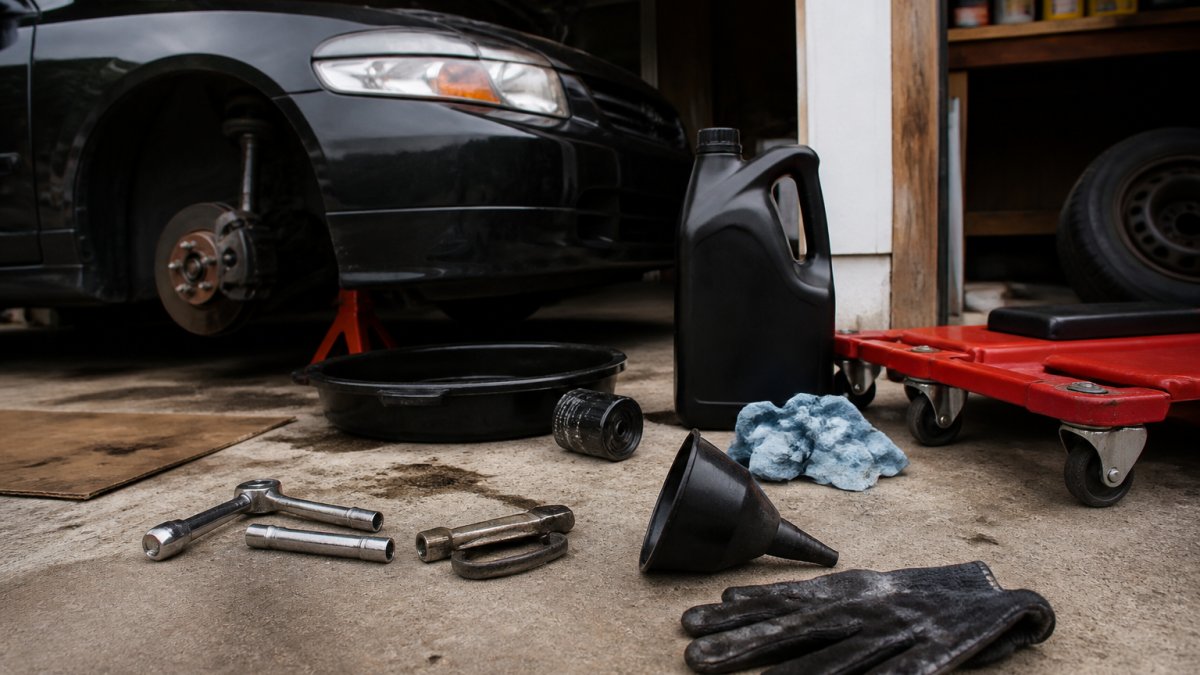
Essential supplies:
- Motor oil (correct type and quantity for your vehicle)
- Oil filter (specific to your make and model)
- Oil drain pan (at least 6-quart capacity)
- Socket wrench (correct size for your drain plug)
- Oil filter wrench (for removal and installation)
- Jack stands or ramps (for safe vehicle access)
- Protective gloves and eye protection
- Shop towels or rags
- Flashlight or work light
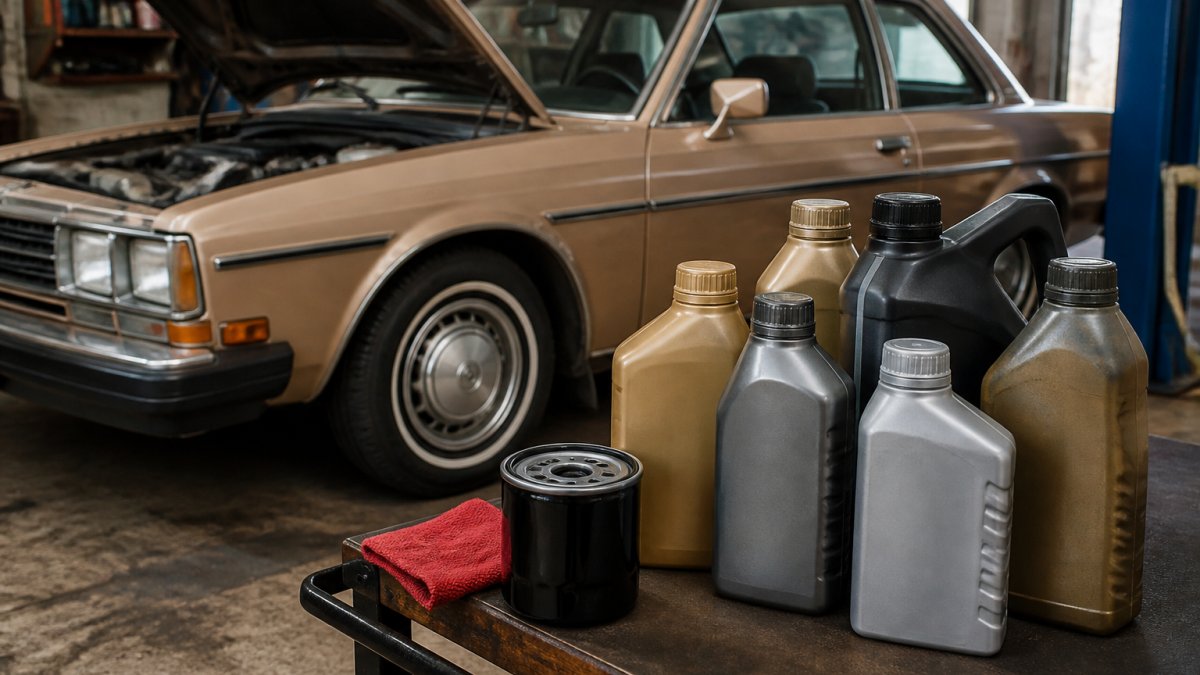
The oil type matters. Conventional, synthetic blend, and full synthetic each cost differently. Synthetic runs $8-$12 per quart while conventional costs $4-$6 per quart.
Filters vary too. A quality filter costs $8-$25 depending on your vehicle. Cars.com's oil change guide confirms that filter prices vary substantially based on vehicle make and model, and synthetic oil affects total cost significantly.
One thing many DIYers miss: you need the right equipment for your specific vehicle. A 2015 Honda requires different tools than a 2020 Ford truck. Check your owner's manual before buying anything.
How Long Does an Oil Change Take at Home
Most people underestimate the time required. You're not just draining oil and installing a new filter. You need to prepare your workspace, get under the vehicle safely, and clean up afterward.
Realistic timeline:
- Preparation and setup: 10-15 minutes
- Draining old oil: 10-15 minutes
- Removing and installing filter: 5-10 minutes
- Adding new oil and checking level: 5-10 minutes
- Cleanup and disposal: 10-15 minutes
Total time: 40-65 minutes for an experienced DIYer. First-timers often need 90 minutes or more.
That time has value. If you earn $25 per hour, a one-hour job costs you $25 in lost productivity. A two-hour job costs $50. Add that to your material costs and the savings shrink quickly.
Professional shops do this in 20-30 minutes because they have lifts, organized tool layouts, and daily practice. You're working in your driveway or garage with limited space and unfamiliar equipment.
Mobile Mechanic Oil Change Cost Versus DIY
Most cost guides compare DIY to a shop and stop there. But there's a third option, mobile service, and a true three-way comparison changes the decision.
Cost comparison (typical 5-quart synthetic change):
| Option | Upfront cost | Recurring cost | Time cost |
|---|---|---|---|
| DIY (first time) | $86-$268 in tools | $27-$115 per change | 40-90 minutes |
| DIY (tools owned) | $0 | $27-$115 per change | 40-90 minutes |
| Mobile mechanic | $0 | $65-$125 | 0 minutes of your time |
| Shop | $0 | $35-$75 conventional / $65-$125 synthetic | 30-60 minutes plus drive and wait |
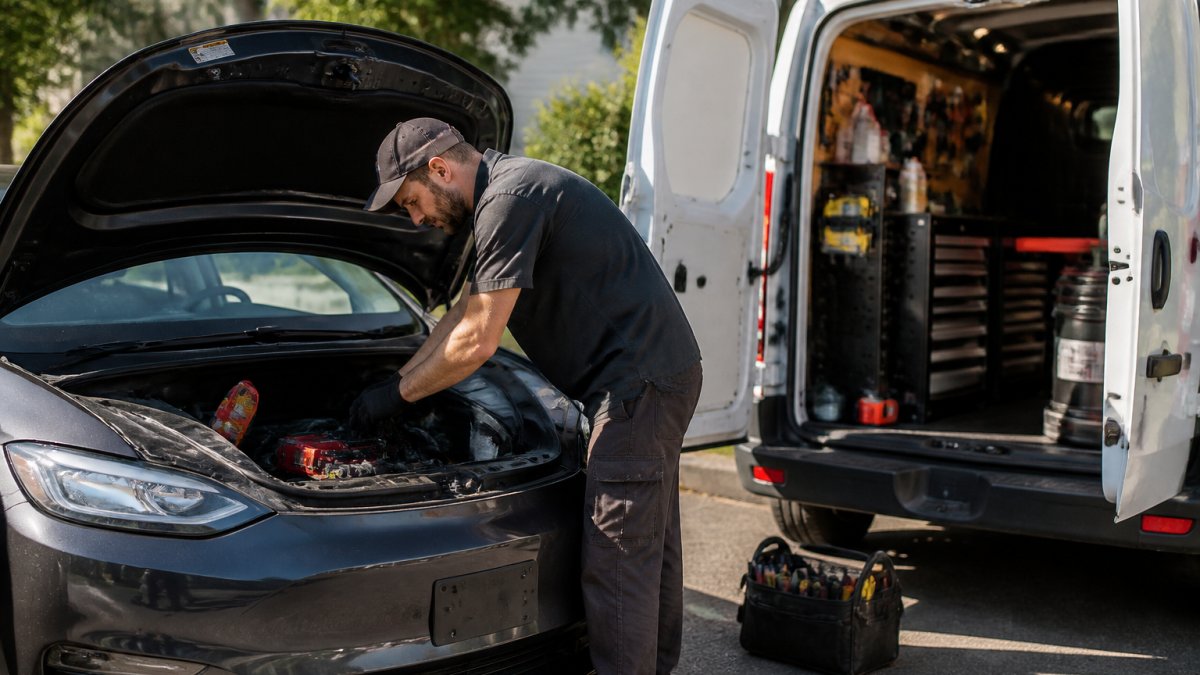
Mobile mechanics typically charge similar rates to shops, often $65-$125 for synthetic, because you're paying for the same oil, filter, and labor, plus the convenience of having it done in your driveway. Learn more about mobile mechanic pricing for oil changes and other services.
What's included in each option:
- DIY: You buy the oil and filter, do the labor, handle disposal, and own any mistakes. You save the labor cost but absorb the time, tool investment, and risk.
- Mobile mechanic: Oil, filter, labor, disposal, and a warranty are included. The mechanic brings the tools and takes the used oil away. You don't drive anywhere or wait in a lobby.
- Shop: Oil, filter, labor, disposal, and usually a warranty are included. You drive to the shop, wait or arrange a ride, and pick up the vehicle later.
Convenience trade-offs. A shop oil change takes 20-30 minutes of bay time but often 60-90 minutes of your day once you count the drive, wait, and pickup.
When each option wins:
- DIY wins if you already own the tools, enjoy the work, and value your time at under roughly $15-$20 per hour. It also wins if you're maintaining multiple vehicles and can spread the tool cost across them.
- Mobile service wins if your time is worth more than the $25-$80 you'd save doing it yourself, you lack a safe workspace, or you want the job done without leaving home.
- Shop service wins if you need other services bundled in (tire rotation, inspection) or you're already near the shop.
Shop prices run $35-$75 for conventional and $65-$125 for synthetic, per CarMatcher's 2026 pricing. Mobile mechanics typically charge similar rates. The difference isn't the price, it's what you get for it.
Compare this to DIY: $40-$80 in materials plus $80-$260 in tools (first time) plus 40-90 minutes of your time.
The hidden benefit of professional service, whether mobile or shop, is accountability. If something goes wrong, the provider fixes it.
The Hidden Costs Nobody Talks About
Several expenses sneak up on DIY oil changers. These often exceed the material savings.
Used oil disposal. Most states require proper disposal of used motor oil.
Drain plug damage. Strip the threads and you're replacing the plug, gasket, and potentially the oil pan. Cost: $100-$300.
Filter wrench damage. Overtighten a filter and you crush it. Undertighten and it leaks.
Workspace cleanup. Oil spills happen. You'll spend time cleaning concrete, disposing of contaminated rags, and possibly paying for hazardous waste removal.
Incorrect oil type. Buy the wrong viscosity or mix conventional with synthetic and your engine suffers.
Tool storage. Your tools need a dry, organized space. If you don't have a garage or basement, storage becomes a problem.
These hidden costs explain why the U.S. automotive maintenance industry is valued at $14.8 billion annually, according to IBISWorld's 2026 industry report. People pay professionals to avoid these complications.
When Professional Service Makes Financial Sense
Professional service wins in several scenarios. Understanding these helps you decide.
You should hire a professional if:
- You change oil less than once per year
- You lack proper workspace (driveway, garage, or safe lift area)
- You don't own basic tools and don't want to buy them
- You value your time above $15 per hour
- Your vehicle has complex undercarriage access
- You want a warranty on the work
- You need the service completed quickly
For most people in Hagerstown and Frederick balancing work and family, professional service makes sense. Discover the signs that indicate when you need mobile car repair.
Chops Mobile Mechanic brings this service to your location. No trip to a shop. No waiting. Our team handles the job while you handle your day. We use the correct oil type for your vehicle, dispose of used oil properly, and back every service with a 12-month warranty.
The real question isn't DIY versus professional. It's whether the $30-$50 you save doing it yourself justifies the time, tools, risk, and hassle.
Frequently Asked Questions
How much does an oil change at home cost compared to a shop?
The oil change at home cost for materials typically ranges from $20-$50 for conventional oil and $40-$75 for synthetic, depending on your vehicle and oil type. Professional shops charge $35-$75 for conventional and $65-$125 for synthetic. However, at-home costs don't account for one-time tool purchases, disposal fees, or your time investment. Over a single change, DIY appears cheaper; over multiple changes, the math shifts based on whether you already own tools and how you value your time.
What oil change supplies do I need to buy, and what's the total cost?
Essential oil change supplies include motor oil (quantity depends on your vehicle), an oil filter, an oil drain pan, socket wrench, oil filter wrench, jack stands or ramps, and protective gloves. Oil costs $20-$75 depending on type and quantity; filters run $5-$20; basic hand tools cost $30-$100 if you don't own them. Used-oil disposal may add $5-$10 if you cannot recycle it free at a local auto-parts retailer. Budget $60-$210 for your first change if buying all tools new.
How long does an oil change take at home?
A typical at-home oil change takes 30 minutes to 1 hour for experienced DIYers and 1.5-2 hours for first-timers. This includes draining old oil, replacing the filter, adding new oil, checking the level, and cleanup. Professionals complete the same job in 15-30 minutes. Time also depends on vehicle access, drain-plug location, and filter placement. If your vehicle requires lifting and you're setting up ramps or jack stands for the first time, add another 15-30 minutes.
Is a mobile mechanic oil change cost worth it over DIY?
A mobile mechanic oil change cost depends on your situation. Mobile professionals typically charge a service fee plus parts; pricing varies by provider and location. The value lies in convenience (no tools to buy, no disposal hassle, no time investment) and warranty coverage. For busy professionals, parents juggling multiple commitments, or owners of specialized vehicles, the convenience premium often justifies the cost. DIY saves money only if you perform multiple changes and already own tools.
Changing your own oil saves money only if you do it repeatedly and already own the tools. For most people, professional service delivers better value. You avoid tool investment, save time, eliminate disposal hassles, and get a warranty. At Chops Mobile Mechanic, we handle oil changes on-site with the right oil for your vehicle, proper disposal, and reliable service. Schedule Now and skip the DIY complications.